Sharing the Land: Coordinating Sri Lanka's Leopard Monitoring Program
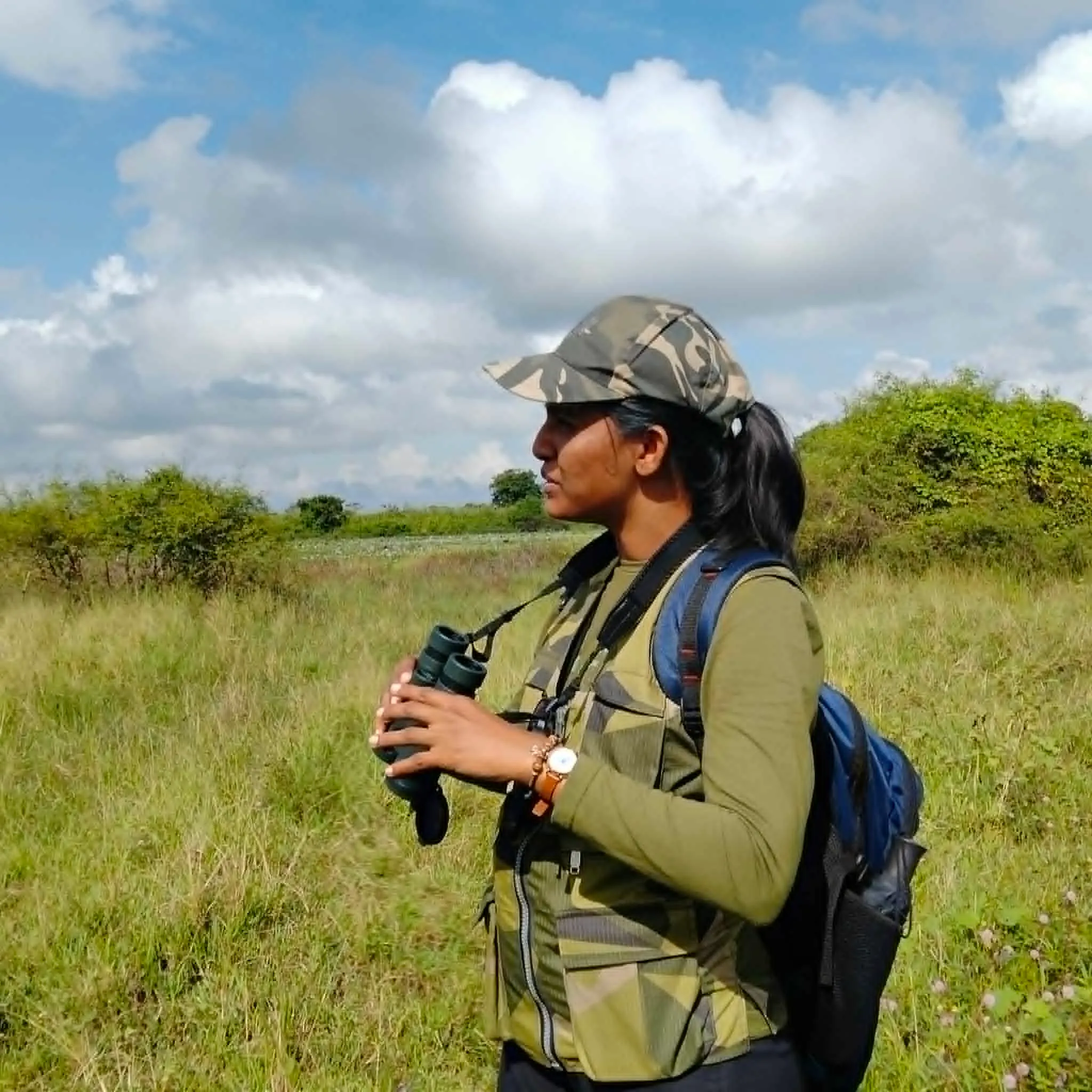
Between 2022 and 2023, I coordinated a multi-regional monitoring system for the Sri Lankan leopard (Panthera pardus kotiya) at the Wildlife and Nature Protection Society (WNPS), with LOLC as financial collaborator. The project ran across six research centers — Kilinochchi, Sigiriya, Sinharaja, Kotagala, Panama, and Belihuloya — deliberately spread to cover every biogeographical region of Sri Lanka. The goals were straightforward to state and hard to achieve: understand human-leopard interactions, raise awareness among local communities, carry out ecological research, and find real solutions to reduce harmful incidents between people and leopards.
The work behind the data
Coordinating six centers meant the same methods had to travel well — field officers logging sign surveys the same way whether they were in the dry zone or the hill country, and reading the same scat or pugmark the same way regardless of who found it.
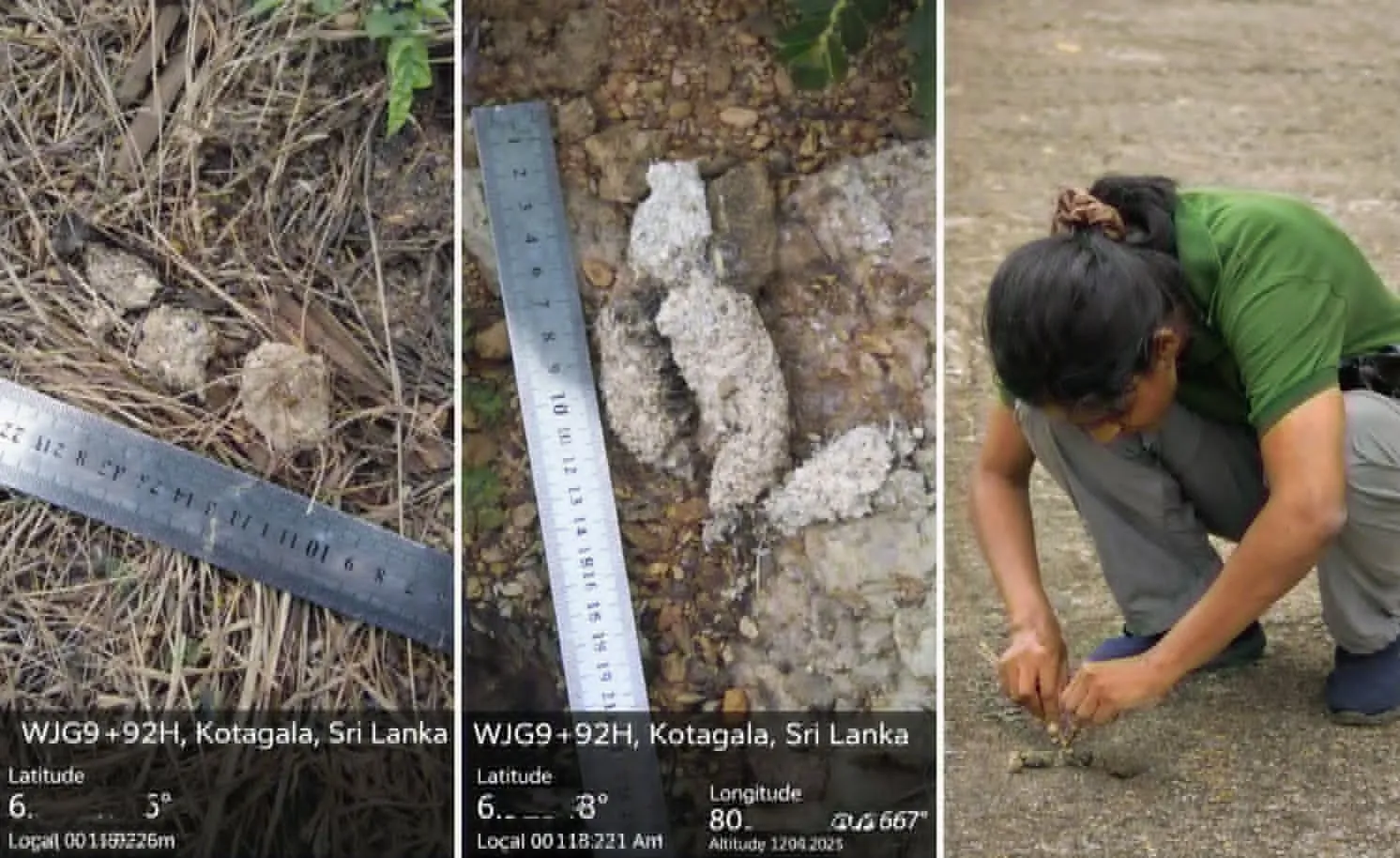
A sign survey in Kotagala — every sample logged against a ruler and a GPS point before it meant anything.
A naming problem, first
One of the biggest challenges we ran into wasn’t ecological — it was a naming problem. Many people we spoke with couldn’t confidently tell Sri Lanka’s four wild cat species apart, and local names for them were often mixed up or applied inconsistently. Before we could ask anyone meaningfully about leopards, we had to start there.
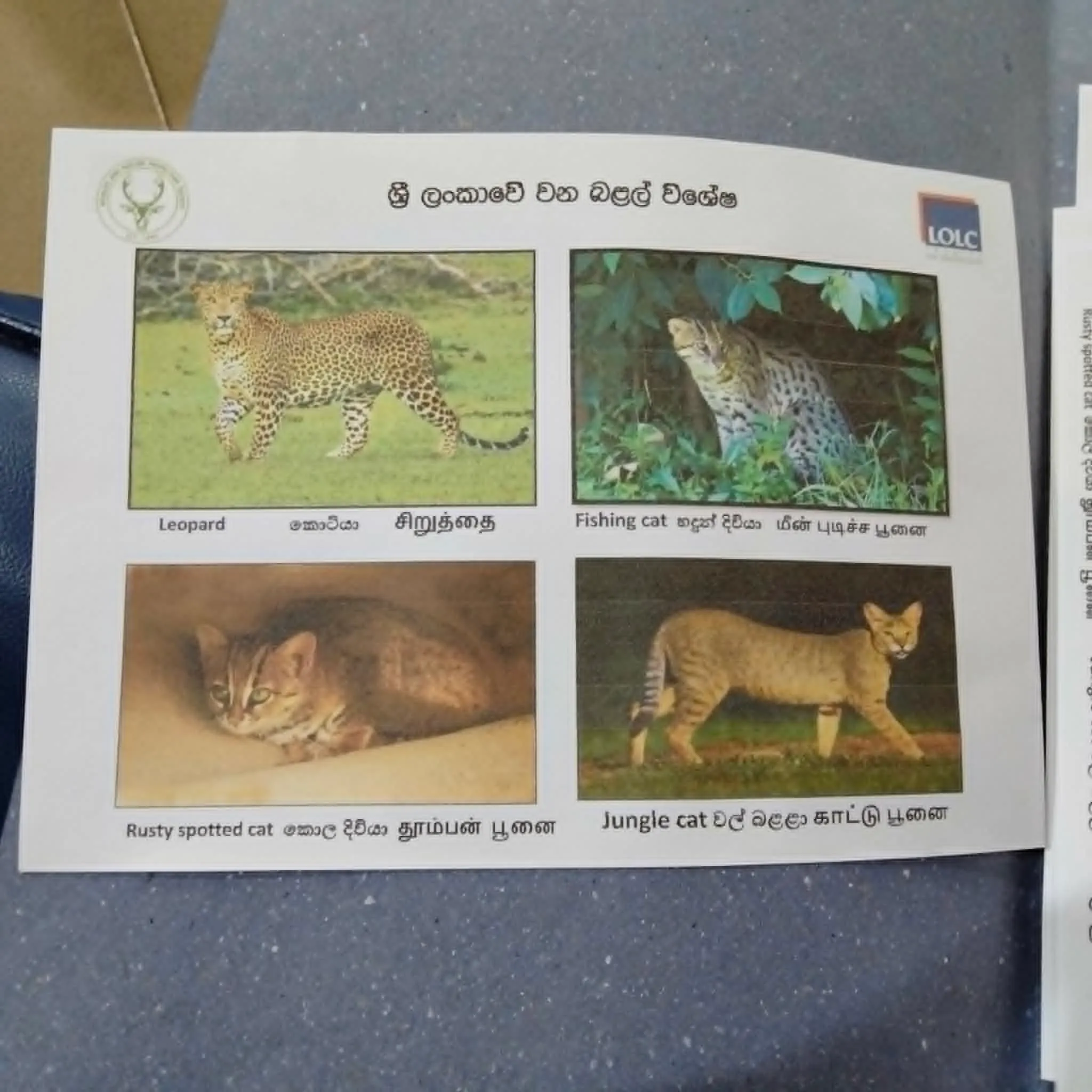
The identification panel we built — leopard, fishing cat, rusty-spotted cat, jungle cat, side by side.
We built a simple identification panel with photographs of all four species so people could see the differences for themselves, and used it as a starting point to understand public perception and reported distribution of each species across the regions we worked in.
Closest to the conflict
We ran leopard awareness programs across all the project’s leopard-range areas, but the central highlands stood out as the most critical. Tea estate workers there live and work in the same landscape as leopards, often at very close quarters, which makes it one of the most sensitive human-wildlife interfaces in the country.
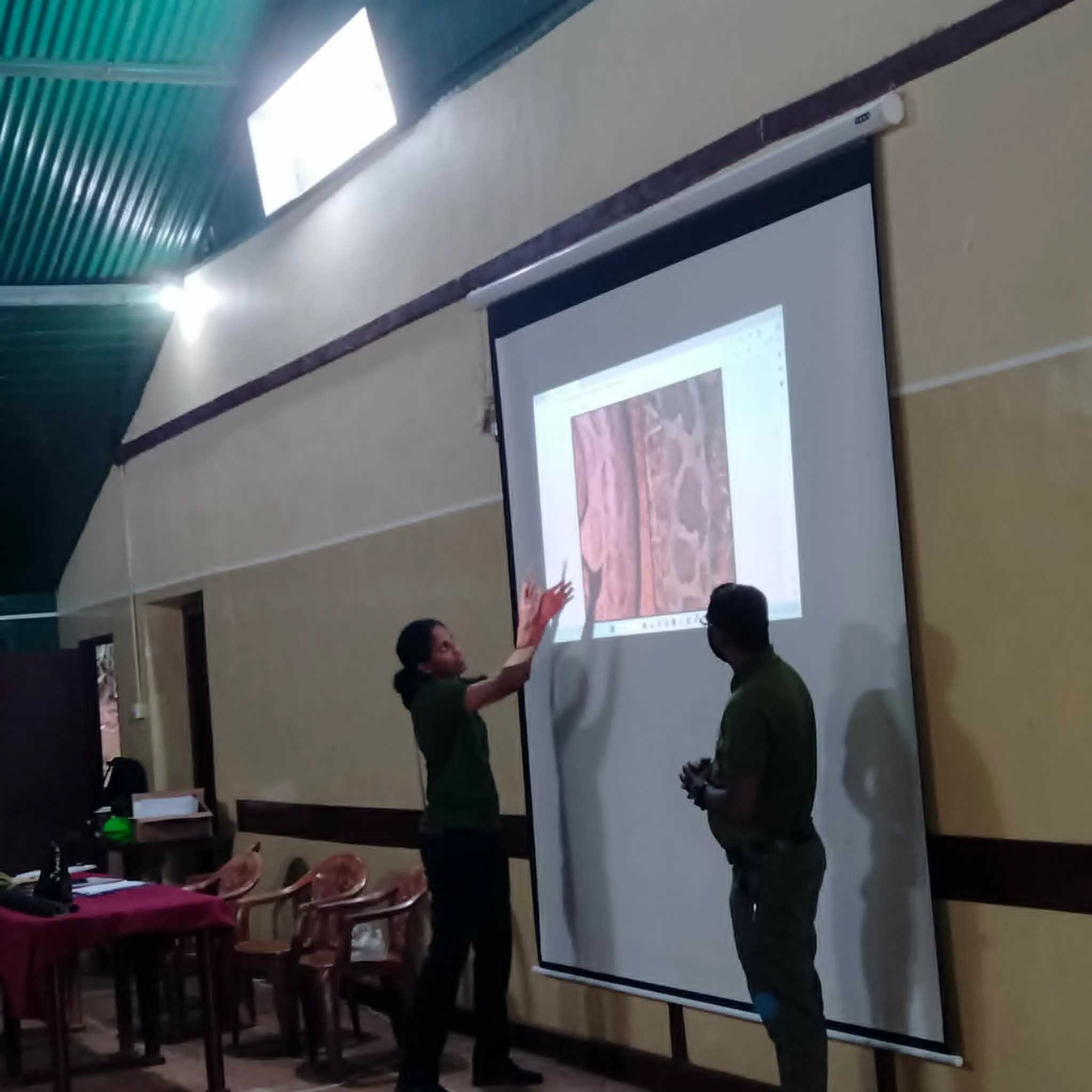
A public awareness session, walking the audience through what to look for.
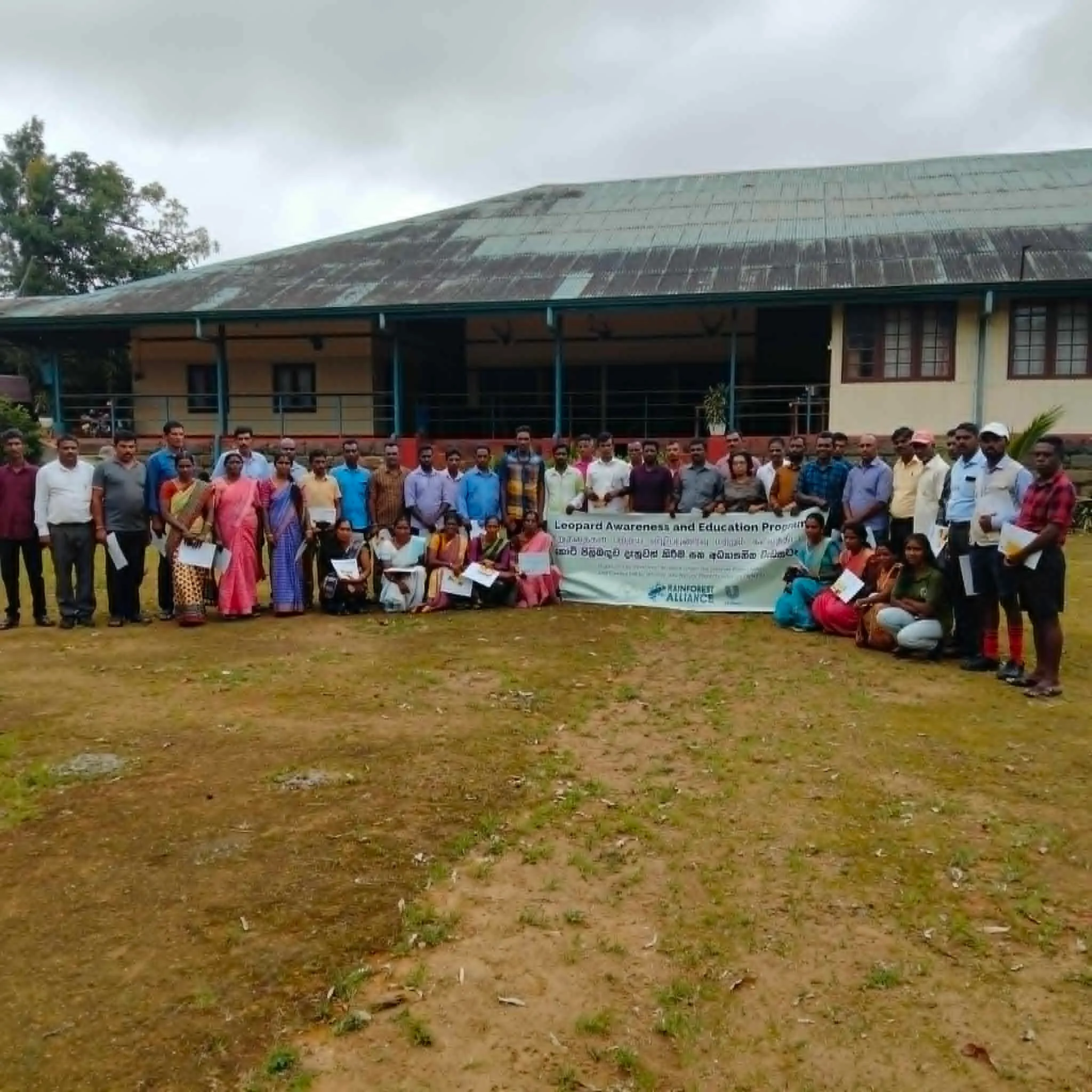
A leopard awareness session with an estate community in the central highlands.
I spent a year working in this project before leaving to start my master’s degree in Finland, and the work there led to a publication on people’s perceptions of leopards — data that came directly from those awareness sessions and conversations with estate communities.
What remains
Some of what we tracked was difficult. Human-induced leopard mortalities occurred at a rate of roughly one per month during the project — a sobering reminder of how much work remains. The leopard is a keystone species in Sri Lanka’s ecosystems: protecting its habitat protects the far broader web of biodiversity that shares that same ground.